
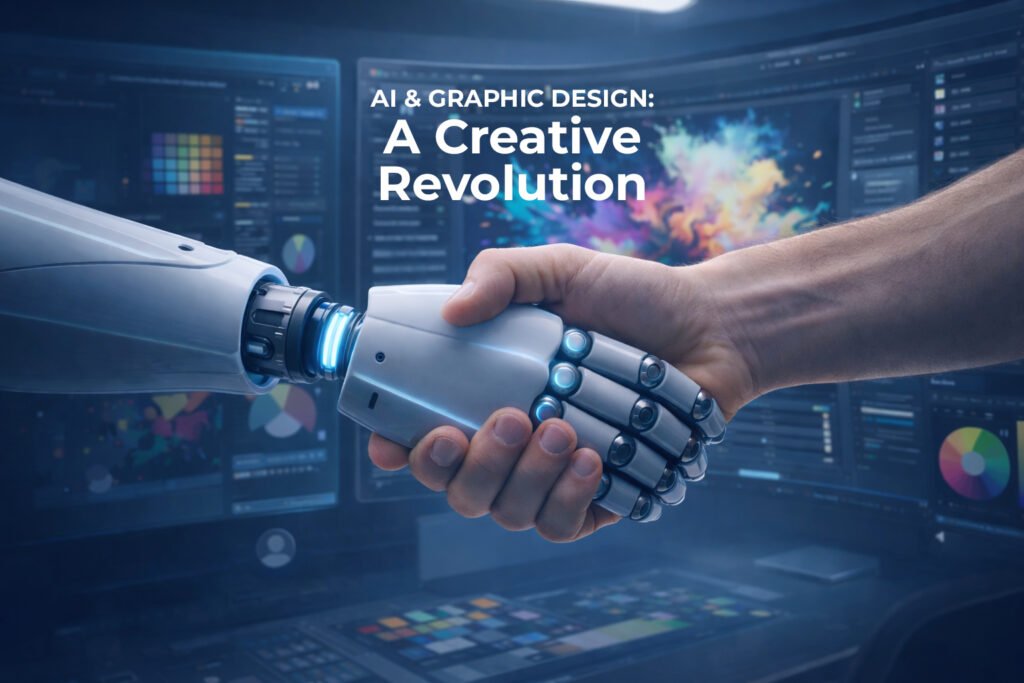
AI is transforming graphic design by enhancing creative efficiency and expanding the scope of visual innovation. With intelligent tools assisting in tasks like image refinement, layout generation, and design optimization, designers can focus more on storytelling and concept development. This integration encourages experimentation, speeds up workflows, and supports consistent branding across platforms. At the same time, it challenges creatives to adapt their skills and maintain originality in an increasingly automated environment, highlighting the importance of human insight alongside technological advancement.
Introduction
Artificial Intelligence is redefining the way graphic design is imagined and executed. By combining advanced technology with creative thinking, AI is transforming traditional design workflows and opening new possibilities for visual expression. Designers can now experiment faster, refine ideas more efficiently, and deliver visually compelling results with greater precision. As AI continues to evolve, it is not only changing how designs are created but also redefining the role of designers, encouraging innovation, adaptability, and a deeper focus on creative storytelling.
What Is AI in Graphic Design?
AI in graphic design refers to the use of intelligent algorithms and tools that can analyze data, learn patterns, and assist in creating visual content. From generating layouts and color palettes to enhancing images and automating repetitive tasks, AI-powered tools help designers work smarter and faster while maintaining creative control.
How AI is Transforming Graphic Design
AI is transforming graphic design by streamlining creative workflows and enhancing visual output. Intelligent tools assist designers with tasks such as image editing, layout creation, color selection, and typography, reducing manual effort and saving valuable time. This allows designers to focus more on creativity, strategy, and storytelling.
AI also enables faster experimentation and personalization, helping designers create designs that better connect with specific audiences. By combining data-driven insights with human creativity, AI is reshaping graphic design into a more efficient, innovative, and impactful creative process.
Benefits of AI in Graphic Design
The integration of AI in graphic design offers several compelling advantages:
- Increases Efficiency: Automates repetitive design tasks, saving time and effort.
- Enhances Creativity: Helps designers explore new ideas, styles, and layouts faster.
- Speeds Up Workflow: Enables quicker design execution and faster project delivery.
- Ensures Design Consistency: Maintains uniform branding across all platforms.
- Enables Personalization: Creates audience-focused designs using data-driven insights.
“AI’s true worth in design is to augment, not supplant, human creativity.”
Boosting Creativity, Not Replacing It
AI in graphic design is designed to enhance human creativity, not replace it. By handling repetitive and time-consuming tasks such as image optimization, layout adjustments, and design variations, AI allows designers to focus on what truly matters—original ideas, visual storytelling, and creative strategy. Instead of starting from scratch, designers can use AI-generated suggestions as inspiration, refining and shaping them with their own artistic vision.
While AI can analyze trends and generate patterns, it lacks human emotion, intuition, and cultural understanding. These human qualities are essential for creating meaningful designs that connect with audiences. When used thoughtfully, AI becomes a creative partner that expands possibilities, encourages experimentation, and helps designers push creative boundaries while maintaining authenticity and originality.
The Future of AI in Graphic Design
The future of AI in graphic design represents a powerful evolution where technology and human creativity merge more seamlessly than ever before. As AI tools continue to advance, they will offer intelligent design assistance, real-time creative recommendations, and deeper personalization based on user behavior and data insights. Designers will be able to automate complex and repetitive tasks, freeing up valuable time to focus on ideation, storytelling, and strategic brand communication. This growing collaboration will not only increase efficiency but also inspire designers to experiment with new styles, formats, and visual narratives. While AI will enhance speed and precision, the role of the designer will remain essential in providing emotional depth, cultural understanding, and creative direction. Ultimately, AI will not replace creativity but will expand its possibilities, shaping a future where graphic design becomes more adaptive, innovative, and impactful across digital and physical platforms.
Conclusion
In conclusion, the integration of AI into graphic design represents a significant shift in the creative landscape, redefining how ideas are developed and brought to life. AI enhances productivity and opens new creative possibilities, allowing designers to experiment, refine, and execute designs with greater precision and speed. However, technology alone cannot replace human imagination, emotional intelligence, and cultural awareness, which are essential for creating designs that truly resonate with audiences. The future of graphic design lies in a balanced collaboration where designers guide AI with creativity and purpose, using intelligent tools to amplify their vision. By embracing this partnership, the design industry can continue to evolve, delivering innovative, authentic, and impactful visual communication in a rapidly changing digital world.